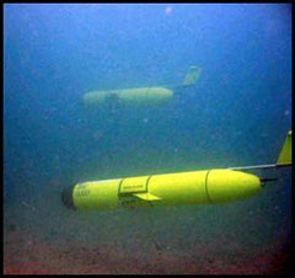
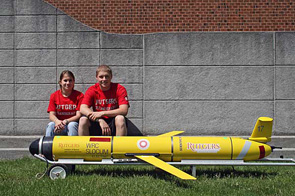
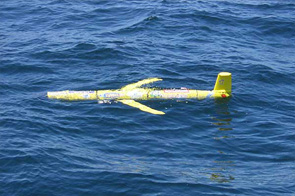
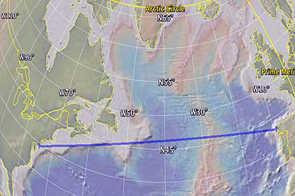
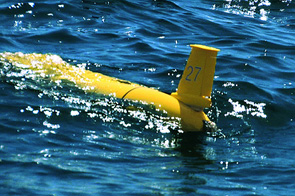
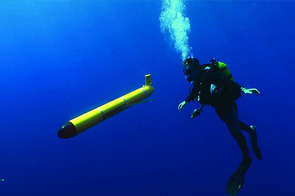
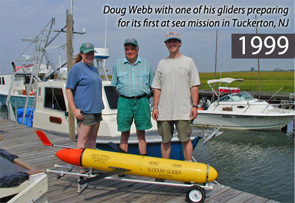
7 Fun Facts About RU27
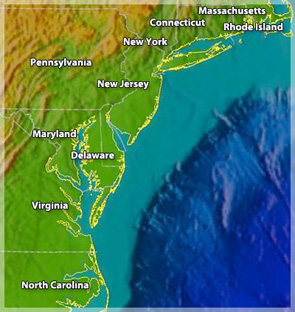
Optical properties on the continental shelves are complex, representing variable contributions of phytoplankton, Colored Dissolved Organic Matter (CDOM), and non-algal particles. Over the past few years, the amount of optical data available via remote or in situ observations rapidly expanded. These observations have proven to be very effective at delineating hydrographic features not evident in the traditional physical data that are currently assimilated into numerical forecast models.
In this project, researches from Rutgers University, the Woods Hole Oceanographic Institution, Dalhousie University and the California Polytechnic State University are working together combining physical and optical observations with models to enhance our understanding of coastal processes.
The main goals of the project are:
In order to accomplish these goals, we are currently working on:
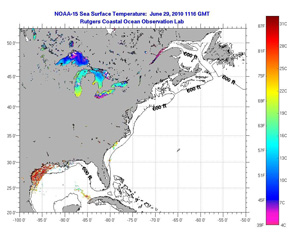
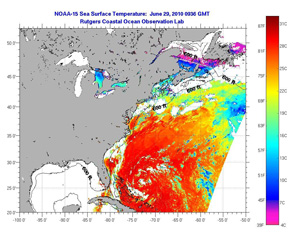
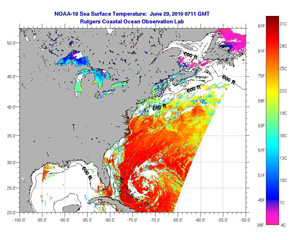
The X-Band dish (right) was installed in the Fall of 2003 and collects MODIS data from NASA's Aqua and Terra satellites, as well as ocean color data from India's Oceansat satellite.
Data are processed to into various products (i.e., sea surface temperature, ocean color, etc.) and then converted jpeg images are made for easy downloading and viewing. There are detailed product descriptions on each product page. Sea Surface Temperature is our largest image library, with imagery reaching back to 1993. Chlorophyll Concentration imagery goes back to 2001. Our other image archives begin in 2004.
Oceanography is augmenting the ship-based expeditionary science of the last two centuries with a distributed, observatory-based approach in which scientists continuously interact with instruments, facilities, and other scientists to explore the earth-ocean-atmosphere system remotely. In order to provide the U.S. ocean sciences research community with access to the basic infrastructure required to make sustained, long-term and adaptive measurements in the oceans, the National Science Foundation (NSF) Ocean Sciences Division has initiated the Ocean Observatories Initiative (OOI).
Routine, long-term measurement of episodic oceanic processes on a wide range of spatial and temporal scales is crucial to resolving scientific questions related to Earth’s climate, geodynamics, and marine ecosystems. Innovative ocean observatories providing unprecedented levels of power and communication and access to real-time sensor networks will drive scientific innovation and provide education and outreach capabilities that will dramatically impact the general understanding of, and public attitude toward, the ocean sciences.
The OOI comprises three distributed yet interconnected observatories spanning global, regional and coastal scales that when the data is combined will provide will allow scientists study a range of high priority processes highlighted by the community. The OOI CyberInfrastructure (CI) constitutes the integrating element that links and binds the three types of marine observatories and associated sensors into a coherent system-of-systems.
The objective of the OOI CI is to provide a comprehensive federated system of observatories, laboratories, classrooms, and facilities that realizes the OOI mission. The infrastructure provided to research scientists through the OOI will include the sea floor cables combined with water column fixed and mobile systems. The CI initiative also includes components such as unified project management, data dissemination and archiving, and education and outreach activities essential to the long-term success of ocean observatory science. The vision of the OOI CI is to provide the OOI user, beginning at the science community, with a system that enables simple and direct use of OOI resources to accomplish their scientific objectives. This vision includes direct access to instrument data, control, and operational activities described above, and the opportunity to seamlessly collaborate with other scientists, institutions, projects, and disciplines.
COSEE-NOW proposes to use information generated by ocean observing systems (OOS) as a powerful platform to enhance public literacy about the ocean and stimulate public support for ocean research.
The mission of COSEE-NOW is to enable use of transformative ocean research and effective education practices to inspire students and the general public in ocean exploration, discovery, and stewardship.
COSEE-NOW has identified three key areas of investment that combine the resources and experiences of the project PIs to promote high-quality OOS education and public outreach (EPO) and contribute to the COSEE network.
The goals include:
一届ematic COSEE- Networked Ocean World (NOW) can be used as a vehicle to provide educational leadership as observatories continue to transition from vision to reality. This COSEE’s efforts will serve as the pathfinder for collaborative EPO activities associated with existing as well as new observatories, visualizations, and cyberinfrastructure technologies that will come online in the next five to ten years.
COSEE NOW will address identified OOS community needs including the development of a community of educator leaders, the creation of a coherent collection of education products, and the implementation of a strategy for delivering these products and messages to target user groups. In addition, we will provide the bridge linking the scientific and societal needs of ocean observatories while promoting teaching and learning, broadening the participation of underrepresented audiences, enhancing education infrastructure, and disseminating our results to educators and scientists alike.
CORE Staff will ensure the Center’s goals are met and will convene the advisory committee and task forces. Project partners will manage specific Center tasks. In the future, additional project partners will be included, as the collaborative and cooperative nature of COSEE will help leverage funding in related areas.
COSEE-NOW, its partners, goals, and objectives, have been assembled and organized to meet needs that have been articulated by the OOS science and EPO communities as noted in this proposal’s letters of support. Our prior experience in the COSEE network, proven track record in OOS EPO, and our understanding of qualities for successful partnerships will serve us well as we pursue the tasks outlined in this proposal.
Success of the ocean networks will be measured by improved scientific understanding of the oceans and improved ocean literacy of human society. The proposed COSEE-NOW will build the scientist-educator partnerships necessary to create a networked ocean world.
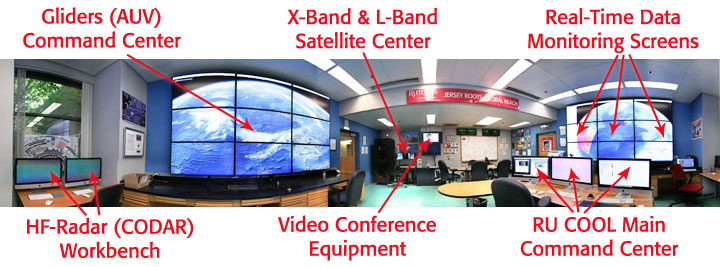
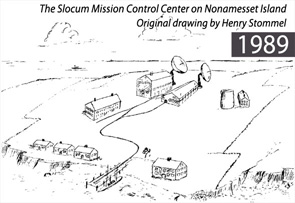
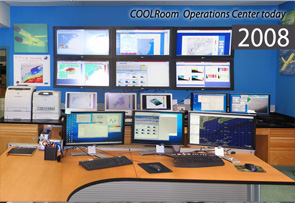
“I walk into our control room, with its panoply of views of the sea. There are the updated global pictures from the remote sensors on satellites, there the evolving maps of subsurface variables, there the charts that show the position and status of all our Slocum scientific platforms, and I am satisfied that we are looking at the ocean more intensely and more deeply than anyone anywhere else.” Henry Stommel (1989)
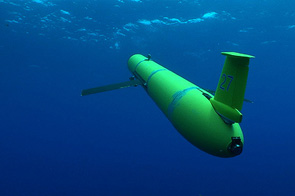
探索全球海洋一直是根本factor driving human society. Historically humans have relied on ships to provide platforms to live, travel and explore the oceans for centuries. After ships, the next great technical evolution in ocean exploration was the development of satellite remote sensing. This revolution in the 1970’s provided a synoptic global perspective that has fundamentally altered our view of the world’s surface ocean. The advent of ocean robots in the last decade have ushered in the next technical revolution in oceanography. The robots provide a large subsurface picture of the ocean. We in the Coastal Ocean Observation Lab are committed to moving the robot revolution forward.
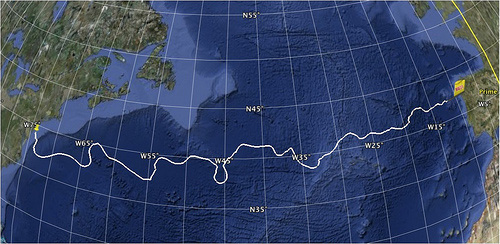
在2006年立陶宛,里克•斯平拉博士从NOAA年代at us down. He looked at us and began the conversation with, “For the good of your country, you must inspire the next generation of scientists and engineers and I want you to cross an ocean basin with a robot.” That was daunting… Since then in collaboration with Webb Research, we have focused on Dr. Sprinrad’s challenges. We believe that developing a permanent presence in the ocean using robots is a powerful tool to inspiring the next generation of the scientists and engineers. Therefore we wish to develop long duration flights and to have these missions conducted by young scientists during their undergraduate years. We believe this will be critical showing young people that science, engineering and exploration is the most rewarding career possible.
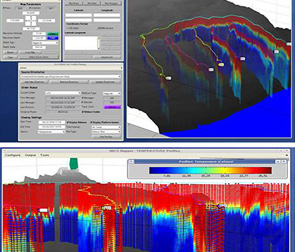
Optical properties are complex representing variable contributions of phytoplankton, Colored Dissolved Organic Matter (CDOM), marine and atmospherically derived non-algal particles. The relative contributions of these are particularly complex for enclosed inland seas such as the Mediterranean. It is critical to collect regional ocean color data from satellites which must be complemented with spatial subsurface measurements. The development of autonomous platforms outfitted with a range of physical/optical sensor packages offer great potential. Slocum Coastal Gliders make an ideal platform when coupled with the appropriate optical sensor suite. The utility of the Glider has lead to the development of Glider Operations Center (GOC) which allows operators anywhere in the world to remotely control and visualize Glider data which can also be easily merged with numerical model data outputs and/or remote sensing imagery.
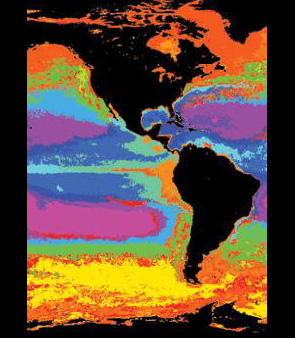
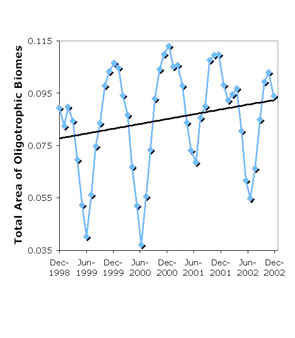
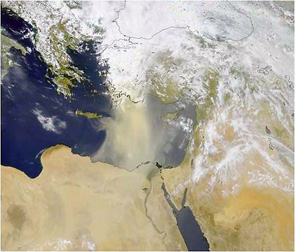
Glider data will address the importance of atmospheric dust in the Mediterranean. The importance of atmospherically derived nutrients has been shown and its role to marine ecology and productivity has been frequently hypothesized. For example, in the Mediterranean, dust from the Sahara and northern European countries is hypothesized to account for up 15% of the new production and up to 14% of the total primary production in the Mediterranean; however documenting deposition and its relationship to primary productivity over the time (weeks to months) and space (100-1000 of kilometers) scales that these processes operate has been difficult. This has forced workers to rely on remote sensing; however these approaches are susceptible to the presence of dust which mimics the presence of phytoplankton in the satellite imagery. Ocean color algorithms use remote-sensing reflectance to estimate the concentration of chlorophyll a. In very clear waters the presence of dust can impact the accuracy of the empirical algorithms. Given this, is the ocean signal associated with atmospheric dust related to the stimulated phytoplankton productivity or is it simply the dust itself? We must quantify the impact of dust on both the in situ optical properties and biological communities over relevant spatial (100 kms) and temporal (month) scales in oligotrophic waters.
Given these interests we will in this project:
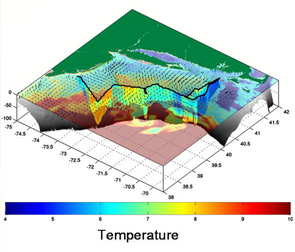
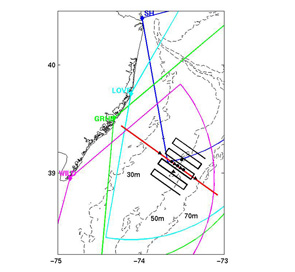
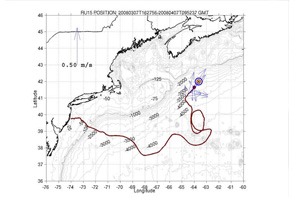
A merged SST satellite, CODAR, and MURI sponsored Glider line. Capabilities also now exist to merge model outputs.
This international partnership is focused on developing the technologies to document and understand how changes in coastal waters impact the living resources and ecology of the Norwegian coast and Southwestern Barents Sea. Polar ecosystems have been experiencing dramatic changes over the last century. Warming air temperatures are thawing perma-frost, increasing river discharge, and thinning arctic ice. It is difficult to account for these changes through natural variability, and human activity has been implicated; however the role of both low frequency basin scale cycles and episodic events remains an open question. Additionally, ship traffic has increased and the production and shipping of oil and gas is expanding in the sub-arctic. The Barents Sea is also exposed to pollution from large rivers (Ob, Lena and the Yenisey) and Russian military installations which have been a source of nuclear waste. All these represent complex international issues that effect coastal waters, spanning multiple temporal and spatial scales and requiring the collection of relevant spatial time series data
The challenge of collecting continuous time-series data in oceans is formidable as only the surface is accessible with space-based remote sensing or shore-based radars. Physical hydrography and biogeochemical parameters are highly variable and coupled over a wide range of spatial and temporal scales (meters to thousands of kilometers, hours to decades) that cannot be adequately sampled using traditional sampling methods. This will require the development of sub-surface robotic networks. Time-series observations are needed to resolve both the mean and variance of parameters associated with episodic events, as well as those that occur on seasonal, annual, and interdecadal scales. This partnership in the coming decade will lay the foundation for developing a comprehensive understanding of biogeochemical cycles and temporal trends that will enable the development, parameterization, initialization and validation of global coastal biogeochemical models. The goal is develop a joint undergraduate program where the international cadre of students become the implementation team for deploying cutting edge new robotic networks to study the potential climate responses in the Antarctic.
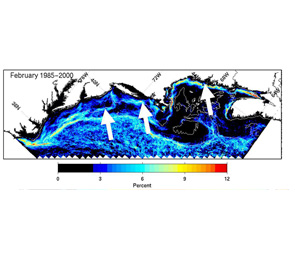
The proposed international collaboration focused on impact of the Norwegian coastal current (NCC) on the southern Barents Sea physical oceanography and biogeochemistry. The grey lines indicate the major currents. The dotted black line shows mean climatological winter sea ice extent. The solid red lines indicate cross-shore surveys that will be conducted monthly using a combination of AUVs. The broken red lines indicate the along shore Langragian surveys (each survey is designated by the arrow) to be conducted during spring or summer process studies. The solid blue lines indicate the existing and funded shore-based surface Norwegian surface current radar nests.
Finally, this ability to obtain real time data from gliders was paramount for the adaptive sampling requirements of 21st century studies in ocean dynamics and biology.
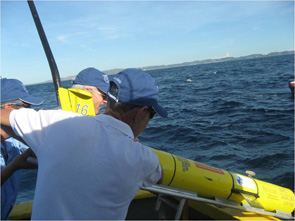
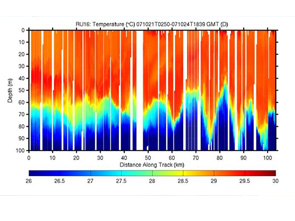
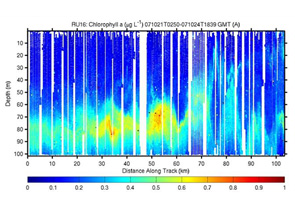
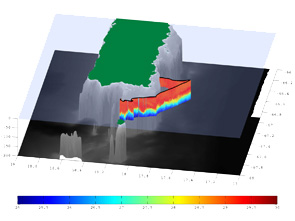
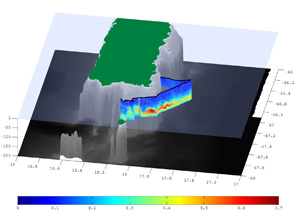
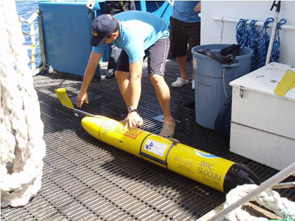
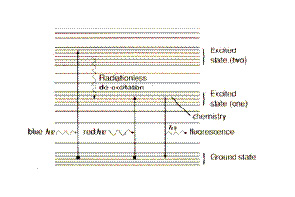
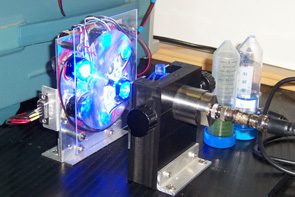
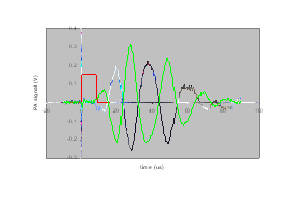
The ability to map the concentration and productivity of phytoplankton is a key to understanding the biogeochemistry of Earth. While great progress has been made to in mapping the concentration of the phytoplankton using ocean color techniques, the ability to measure rate processes remains difficult. Our group has been developing new platforms (cables & robots) for exploring the world’s oceans. As these technologies represent the future of ocean exploration and new sensors must be developed for these platforms. The buoyancy driven gliders represent the most challenging platforms as these systems require small sensors that have minimal power requirements. Therefore the goal of this project is to develop a new sensor that can measure the health of the phytoplankton with a sensor capable of being carried on a Webb Slocum glider. Over the last decade, chlorophyll fluorescence measurements have provided unprecedented insights into the factors controlling phytoplankton physiology and primary production in the ocean. The technique relies on active stimulation and detection of the induction and subsequent relaxation of chlorophyll fluorescence yields on micro- and millisecond time scales. Analysis of the induced variable fluorescence provides a comprehensive suite of fluorescent and photosynthetic parameters of the phytoplankton. From these, a detailed picture of photosynthetic status can be deduced. The measured parameters provide the basis to model gross primary productivity and assess the impact of environmental stresses. This project will build a miniature Fluorescence Induction and Relaxation (FIRe) System for Webb Gliders. This project will demonstrate the FIRe mounted on a Webb Glider.
Our results to date:
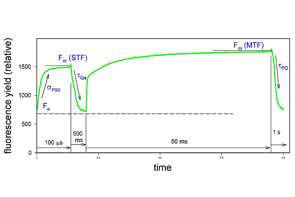
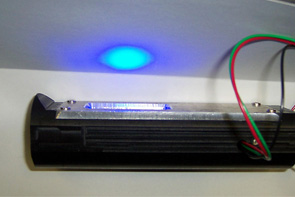
The goal of this research is to develop new infrastructure, theories, algorithms, engineering solutions and cross-disciplinary curricula to future challenging problems in oceanography. The specific goals include:
Background: Rip Current Circulation
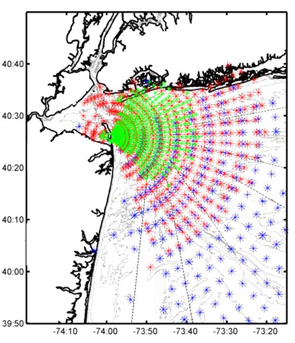
Rip currents are the number one cause of ocean drowning and rescue incidents along the coasts of the United States. According to the United States Lifesaving Association (USLA), 71% of the total surf zone rescues, 12,137 incidents, in 2003 were due to rip currents. Rip currents are strong near-shore features with cross-shore velocities on the order of 1 m/s and along-shore scales of tens of meters. Mechanisms for rip formation include wave-bottom boundary interaction, wave-wave interaction, and wave-current interaction (Dalrymple, 1975; Dalrymple, 1978; Sonu, 1972). Longshore currents are driven by a radiation stress generated by wave breaking. The theory is well developed. Less well developed is the theory for cross-shelf currents in the surface zone, rip currents. The approach in California is to use hf radar currents as the outer boundary to drive inner Shelf models. Wave height, period, and direction are a second input required at the boundary. Increased wave and current observations nearshore will help researchers to better understand the conditions favorable for rip current formation, and ultimately provide the necessary boundary conditions to predict rip currents.
项目目的和目标
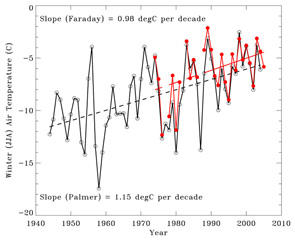
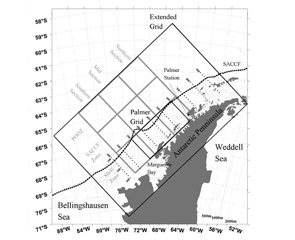
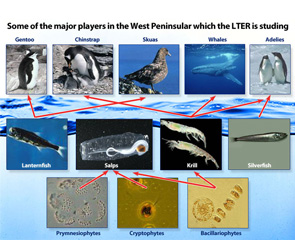
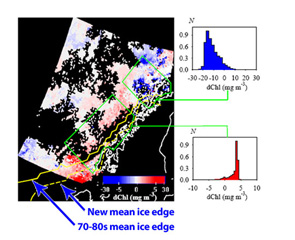
The Western Antarctic Peninsula (WAP) is undergoing some of the most dramatic climate changes on Earth. The WAP region has experienced a winter warming trend during the past half century that is ~5.4 times the global average. Understanding these changes is extremely difficult to unravel and the unprecedented changes we are observing might be a harbinger of the potential changes in the future oceans.
As ocean ecosystems are changing and developing the capacity to resolve those changes and understand the implications for humanity is a clarion call for oceanography. Traditional modes of sampling will not suffice and efforts must be focused on developing networks capable of operating in a harsh environment and maintaining themselves for sustained periods at sea. The proposed robotic network will provide the critical advance needed by the community. We also emphasize that the proposed network is modular and could be relocated to any coastal shelf and scaled up to basin scales.
We will combine physical/biogeochemical robotic sampling to enable ship-based adaptive sampling over ecologically relevant spatial scales. The robotic network will also provide ecosystem data when ships are not available. We call this flexible and smart network a Darwin cluster. Over the relevant scales, the Darwin cluster will provide a long-term in situ network of sensors and instruments that operates in a manner similar to an insect hive with a distributed network of “worker” robots, all of which have specific capabilities that collectively and cooperatively serve the specified needs of a centralized, shore-based “brain.”
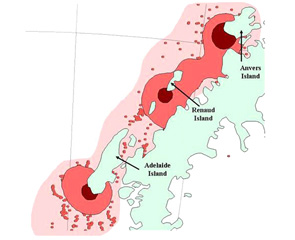
收集的数据将提供关键空间data for numerical ecosystem modeling. We propose to use the robots to study the dynamical interaction between the atmospheric forcing, physical mixing and phytoplankton concentration, metabolism and diversity. These data will be combined with active and passive acoustic sampling of higher trophic levels. This robotic network will be flexible in its sampling strategies in order to adjust on the fly as the ecosystem evolves in response to the physical forcing of the ocean. Initial priority will be given to ‘biological hotspots” along the Antarctic peninsula which are key areas for biogeochemistry, phytoplankton productivity, and higher trophic level feeding (zooplankton, penguins, whales, seals). The robotic networks data will also allow for adaptive sampling when ships are in the vicinity. This effort will directly leverage off an NSF sponsored Long Term Ecological Research (LTER) program being conducted along the WAP.