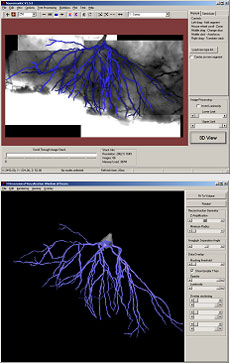



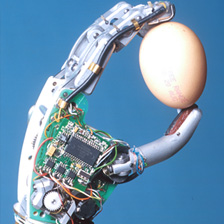
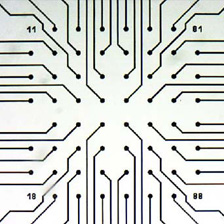
在突破性的项目在学校的系统ems Engineering, members of CIRG are interfacing computers with growing cultures of neurons via electrode arrays, with the aim of having the cultures learn to control mobile robots. This could result in an enormous step forward in understanding the function and developmental process of neurons and neuronal networks, and contribute to our understanding of biological mechanisms underpinning such fundamental properties as memory or learning. Animat could also constitute a viable and ethically more acceptable platform for investigation of neural diseases, such as Alzheimer’s Disease or Parkinson’s Disease, and ultimately could be used for testing new pharmacological treatments. This exciting project opens up as well almost endless possibilities for intelligent robotics platforms and may lead to creation of truly autonomous robots that could be deployed in conditions that precludes frequent human intervention, e.g. for deep space exploration.
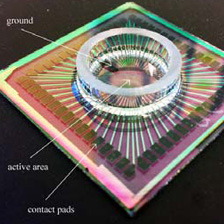
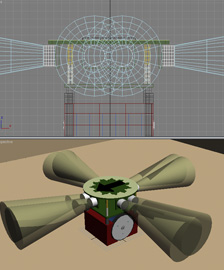
Architecture for Neuronal Cell Control of a Mobile Robot它通常是预期,智能控制器lling mechanism of a robot is a computer system. Research is however now ongoing in which biological neural networks are being cultured and trained to act as the brain of an interactive real world robot – thereby either completely replacing or operating in a cooperative fashion with a computer system. Studying such neural systems can give a distinct insight into biological neural structures and therefore such research has immediate medical implications. In particular, the use of rodent primary dissociated cultured neuronal networks for the control of mobile ‘animats’
(artificial animals, a contraction of animal and materials) is a novel approach to discovering the computational capabilities of networks of biological neurones. A dissociated culture of this nature requires appropriate embodiment in some form, to enable appropriate development in a controlled environment within which appropriate stimuli may be received via sensory data but ultimate influence over motor actions retained. The principal aims of the present research are to assess the computational and learning capacity of dissociated cultured neuronal networks with a view to advancing network level processing of artificial neural networks. This has been approached by the creation of an artificial hybrid system (animat) involving closed loop control of a mobile robot by a dissociated culture of rat neurons. This 'closed loop' interaction with the environment through both sensing and effecting enables investigation of its learning capacity.
Source:
D. Xydas, D. Norcott, K. Warwick, B. Whalley, S. Nasuto, V. Becerra, M. Hammond, J. Downes, and S. Marshall, “Architecture for Neuronal Cell Control of a Mobile Robot”, Springer Tracts in Advanced Robotics - Proceedings of European Robotics Symposium 2008, vol. 44, pp. 23-31, 2008.




Electroencephalogram (EEG) Analysis
Measuring electrical potentials at various points on the scalp over time allows inferences to be made about the sources of electrical activity in the brain. Electroencephalogram (EEG) fluctuations due to synchronous patterns of activity of large pools of neurons seem to contain useful information about the state the brain in terms of the cognitive processing as well as its state of health. Research in CIRG concentrated on novel techniques for characterisation of synchrony patterns and their application towards earlier diagnosis of memory impairment. Such research is of great interest as it characterises fundamental cognitive process and also because of its practical potential for early diagnosis of dementia. This research is continued in collaboration with the School of Psychology and Applied Linguistics at the University of Reading and with the University of Magdeburg, Germany. New project in collaboration with the School of Psychology and Applied Linguistics, building on the successes of EEG analysis projects for BCI applications and in memory function, is concentrating on characterisation of EEG characteristics of linguistic processing without the need for averaging over multiple trials. This is extremely important as the standard averaging approach may mask important features of the information processing in the brain and is most certainly suboptimal for diagnosing subjects with brain damage which almost by definition is going to be subject specific. In collaboration with The University of Uberlandia, Brazil, research into characterising the EEG-like signals from the very early stages of the auditory tract may help the practitioners in early diagnosis of hearing impairments or in diagnosing tumours of the auditory tract.